Alcohol withdrawal is one of the clearest indicators that Alcohol Use Disorder has progressed beyond casual or social drinking. When the body becomes dependent on alcohol, it adapts to its presence. Over time, the nervous system begins to rely on alcohol to maintain balance. When alcohol use is suddenly reduced or stopped, the body struggles to regulate itself, leading to withdrawal symptoms.
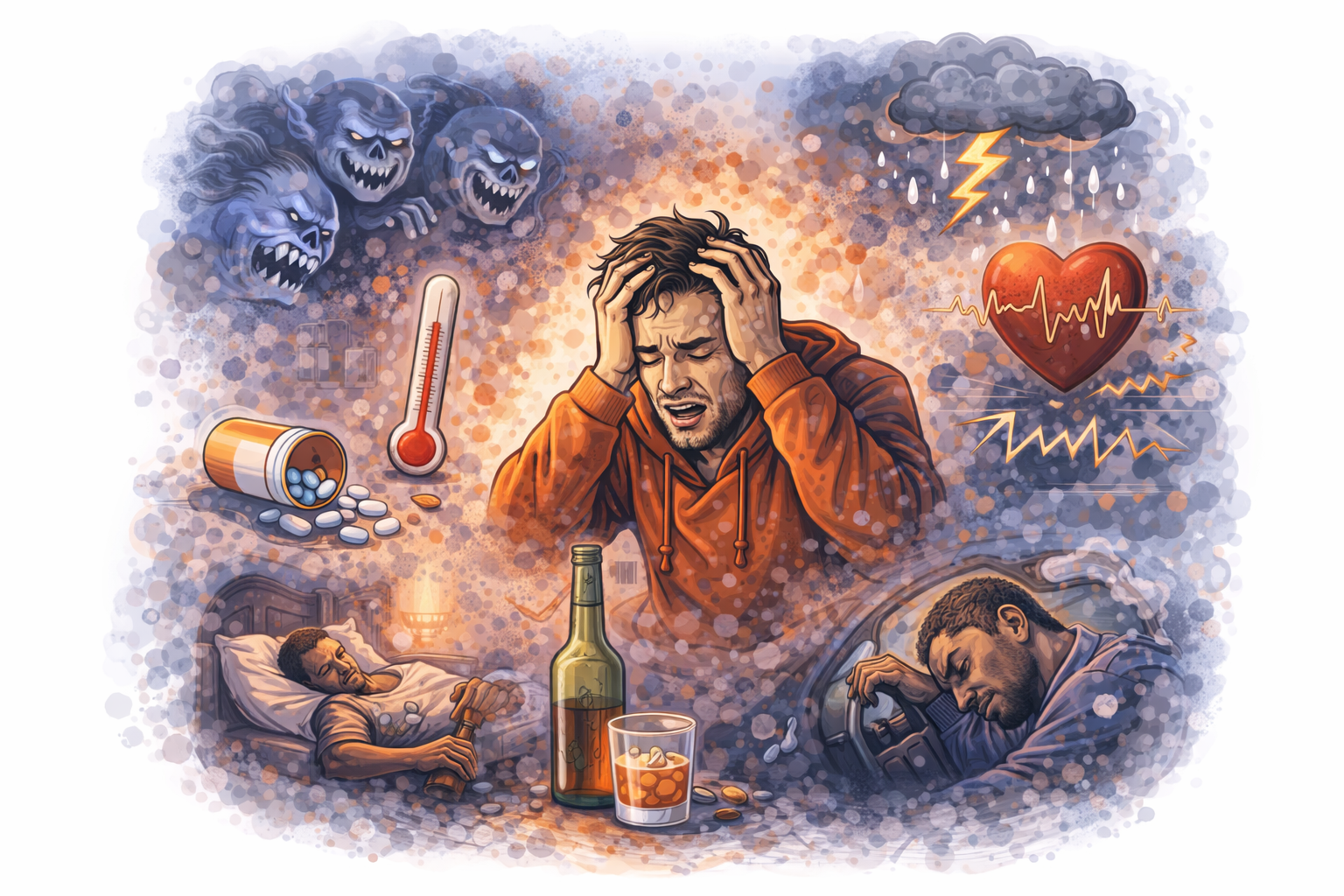
Withdrawal can begin as early as a few hours after the last drink and may range from mild to severe. Early symptoms often include anxiety, irritability, sweating, headaches, nausea, and difficulty sleeping. These symptoms may feel uncomfortable but manageable, which can lead individuals to underestimate the seriousness of their condition.
As withdrawal progresses, symptoms can intensify. Individuals may experience tremors, increased heart rate, confusion, and heightened anxiety. In more severe cases, withdrawal can lead to hallucinations or seizures, which require immediate medical attention.
One of the most dangerous aspects of withdrawal is that it can create a cycle of continued use. Many individuals return to drinking not for pleasure, but to avoid the discomfort of withdrawal symptoms. This reinforces dependence and makes it more difficult to stop.
Physically, alcohol affects nearly every system in the body. Long-term use can impact the liver, cardiovascular system, digestive system, and brain function. Withdrawal is the body’s way of reacting to the absence of a substance it has adapted to.
Understanding withdrawal is important because it highlights the biological component of addiction. Alcohol Use Disorder is not simply a behavioral issue—it involves real physical changes that require proper care and support.
Safe recovery often includes medical supervision, gradual detox, and ongoing treatment to address both physical and psychological aspects of addiction.

ShopTalk Therapeutic Services, LLC
Welcome! I’m Ty’Asia L. Jones, LICDC, MMFT, Founder and Chief Executive Officer of ShopTalk Therapeutic Services, LLC.
My passion is helping individuals, families, and communities recognize that mental health is life health. Throughout my career, I have dedicated myself to addressing mental health, substance use, trauma, and emotional wellness through education, advocacy, and evidence-based care.
I earned a Bachelor of Science from Central Michigan University, and a Master of Science in Education from The University of Akron, and a I am dually licensed in behavioral health and addictions, serving individuals across Ohio and Texas (pending), with specialized experience in co-occurring mental health and substance use disorders.
Beyond clinical practice, I am an author, researcher, speaker, entrepreneur, and mental health advocate. I have co-authored peer-reviewed research on substance use among refugee youth, published multiple scholarly works and eBooks, and continue developing resources that empower people to heal, grow, and thrive. I also create educational content through social media, YouTube, and community outreach to make quality mental health information accessible to everyone.
At ShopTalk Therapeutic Services, my mission is to eliminate the stigma surrounding mental health while expanding access to culturally responsive behavioral health services, education, and community programming. Whether through counseling, workshops, publications, or digital content, my goal is to equip people with practical tools to build healthier relationships, stronger families, and more fulfilling lives.
I believe healing begins with understanding, growth begins with courage, and lasting change begins with one conversation.
If it doesn’t make sense, it doesn’t belong in your life.
Thank you for visiting. I look forward to being part of your journey toward healing, resilience, and lasting wellness.
Leave a Reply