
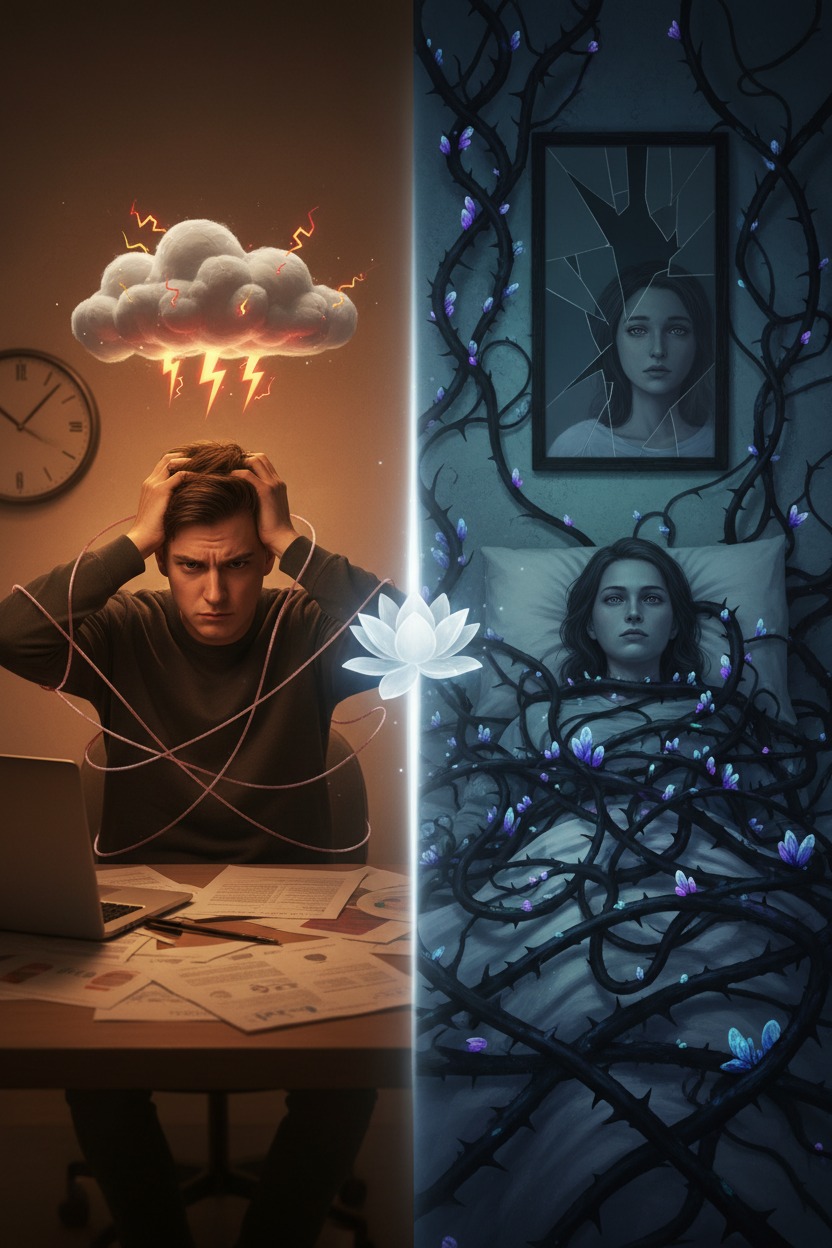
Stress is something everyone experiences. It is a natural response to life challenges and can occur during periods of pressure, uncertainty, or change.
Common sources of stress include:
• work responsibilities
• financial concerns
• family conflict
• major life transitions
In many cases, stress improves once the situation changes or once the person adapts to the challenge.
Mental health disorders, however, involve persistent emotional and behavioral symptoms that affect daily functioning.
For example, stress may cause someone to feel overwhelmed for a short period of time.
Depression may cause someone to feel persistent sadness, loss of interest, and low energy for weeks or months.
Stress may cause occasional worry.
An anxiety disorder may cause chronic worry that interferes with sleep, concentration, and daily activities.
Clinicians often look at three important factors when evaluating mental health concerns:
• how long the symptoms last
• how intense the symptoms are
• how much they interfere with daily functioning
When emotional distress begins affecting work, relationships, decision-making, or personal care, it may indicate that someone is experiencing more than everyday stress.
Understanding this difference helps people recognize when professional support may be beneficial.

Leave a Reply