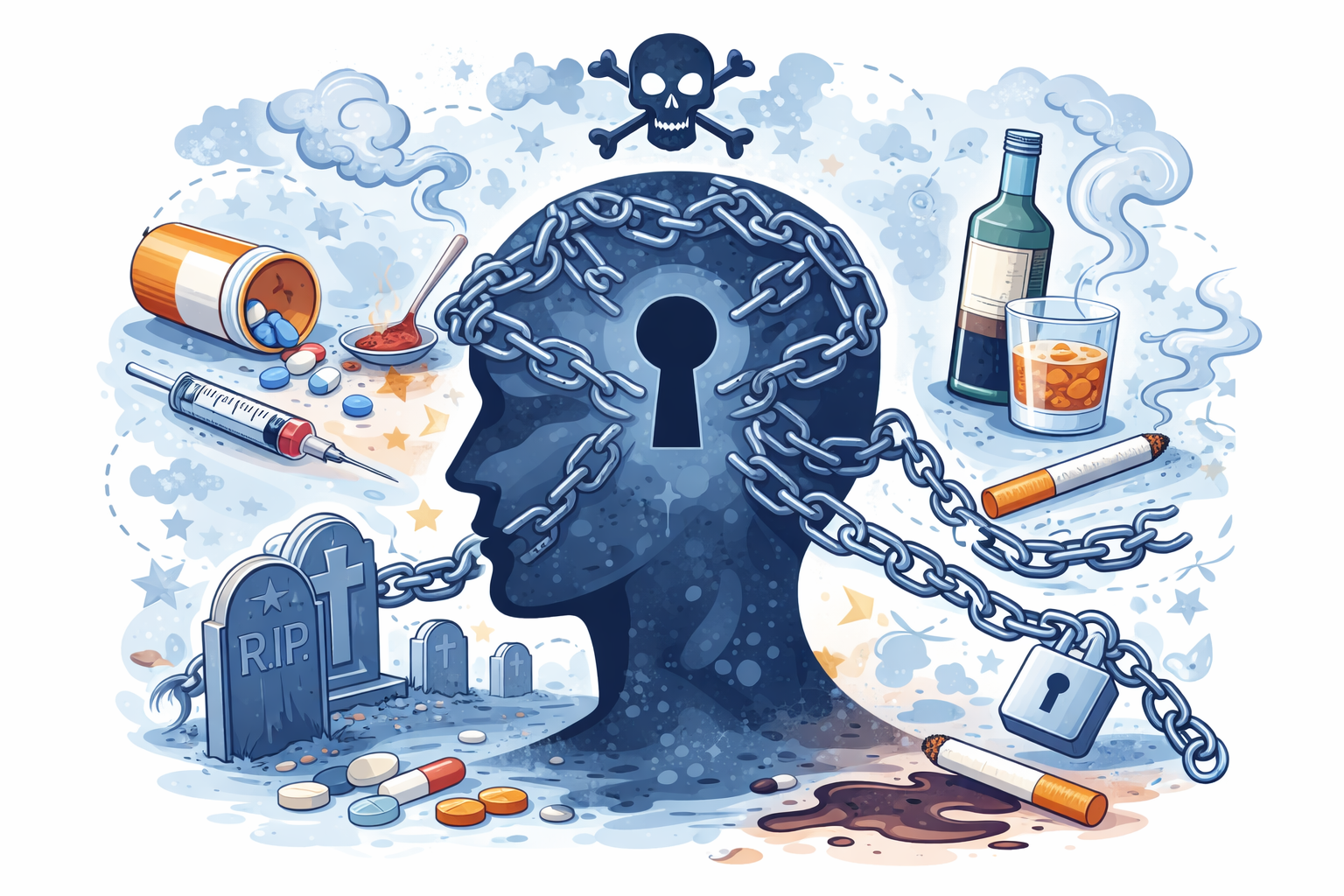
Substance Use Disorder (SUD) is a clinical term used to describe patterns of substance use that lead to significant impairment or distress. While many people associate addiction with personal weakness or poor choices, clinical research shows that addiction is a complex condition involving biological, psychological, and behavioral factors.
According to the DSM-5, Substance Use Disorder is identified when patterns of substance use begin to interfere with important areas of life such as relationships, employment, health, or emotional stability.
In everyday life, Substance Use Disorder often appears through behaviors such as:
• difficulty controlling substance use
• spending increasing amounts of time obtaining or using substances
• continuing to use despite negative consequences
• experiencing strong cravings
• neglecting responsibilities or relationships
One of the defining characteristics of addiction is the continued use of substances even when a person recognizes that it is causing harm.
For example, someone may experience:
• legal problems related to substance use
• conflicts with family members
• declining physical health
• loss of employment
Despite these consequences, stopping or reducing substance use may feel extremely difficult.This occurs because addiction affects areas of the brain responsible for reward, impulse control, and stress regulation.
Understanding Substance Use Disorder from a clinical perspective helps shift the focus away from blame and toward treatment, compassion, and recovery.

Their posts always leave us feeling informed and entertained. We’re big fans of their style and creativity.
I have been struggling with this issue for a while and your post has provided me with much-needed guidance and clarity Thank you so much