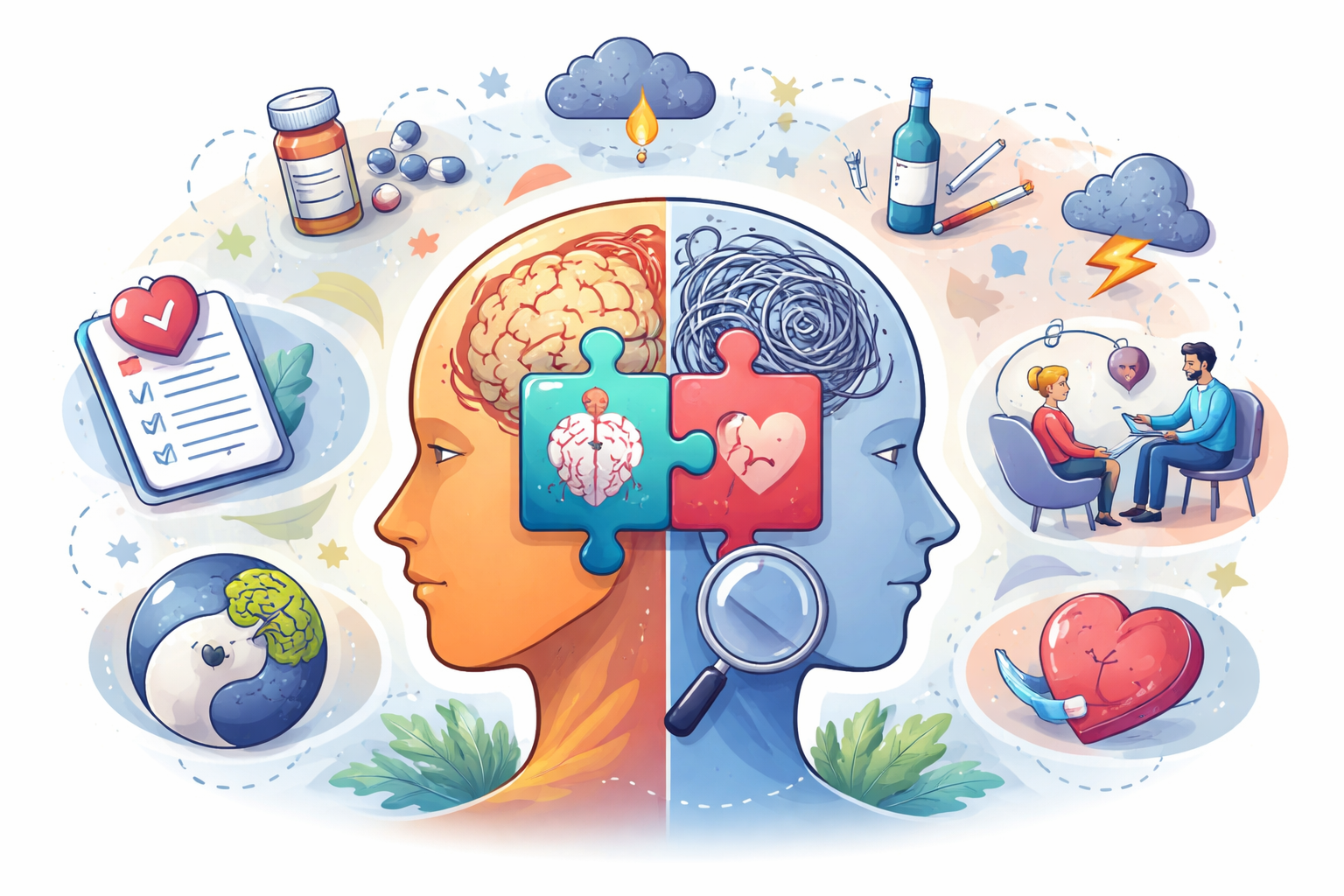
Many individuals who struggle with addiction are also experiencing a mental health condition at the same time. This is known as co-occurring disorders, sometimes referred to as dual diagnosis.
Examples include:
• depression and alcohol use
• anxiety and stimulant misuse
• trauma and opioid addiction
Substances are often used as a way to cope with emotional pain.
Someone experiencing trauma may use alcohol to numb intrusive memories.
Someone experiencing anxiety may misuse substances to calm overwhelming worry.
While substances may temporarily reduce emotional distress, they often create additional problems over time, including:
• increased emotional instability
• difficulty managing relationships
• impaired decision-making
• physical health complications
Eventually, addiction develops its own cycle that can make underlying mental health symptoms worse.
Effective treatment for co-occurring disorders focuses on addressing both the mental health condition and the substance use disorder simultaneously.
When individuals learn healthier ways to manage emotional pain, stress, and trauma, recovery becomes more sustainable.
Understanding co-occurring disorders helps reduce stigma and encourages more compassionate and effective approaches to treatment.

Leave a Reply