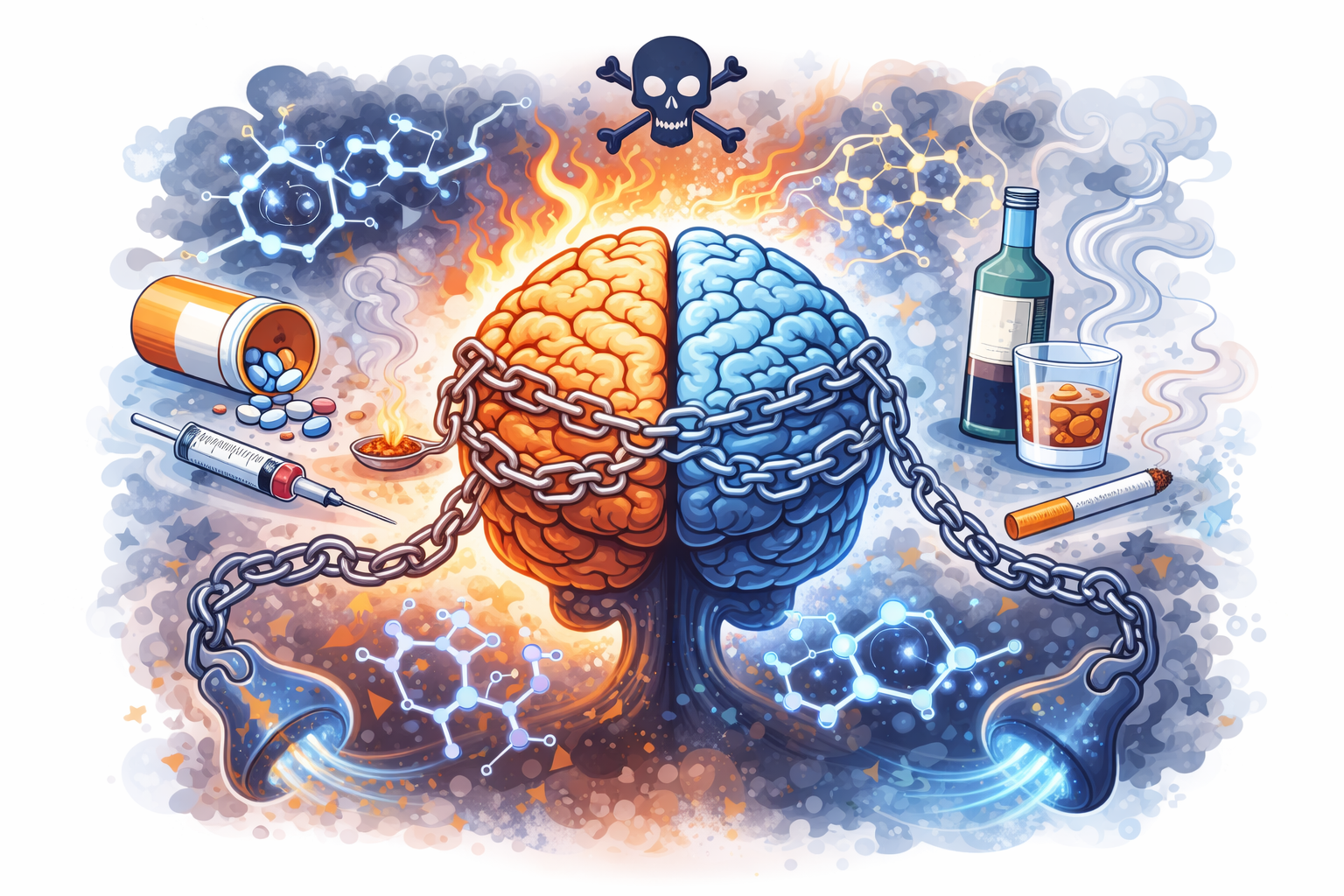
Addiction is not only a behavioral condition. It also involves changes in the brain that affect how people experience pleasure, motivation, and stress.
When a person uses substances such as alcohol, opioids, stimulants, or sedatives, the brain releases chemicals that create feelings of pleasure or relief. One of the primary chemicals involved is dopamine, which is associated with reward and motivation.
Over time, repeated substance use begins to change how the brain responds to both substances and everyday experiences. The brain starts to associate the substance with survival and reward, which increases the desire to use again.
These changes can lead to behaviors such as:
• strong cravings for the substance
• difficulty stopping once use begins
• needing larger amounts of the substance to achieve the same effect
• reduced enjoyment of normal activities
As addiction develops, substances may begin to feel more important than other aspects of life such as relationships, hobbies, or personal goals. This does not happen because a person lacks discipline. It happens because addiction changes the brain’s reward system.
Understanding the role of the brain in addiction highlights why recovery often requires support, treatment, and long-term coping strategies.

Leave a Reply