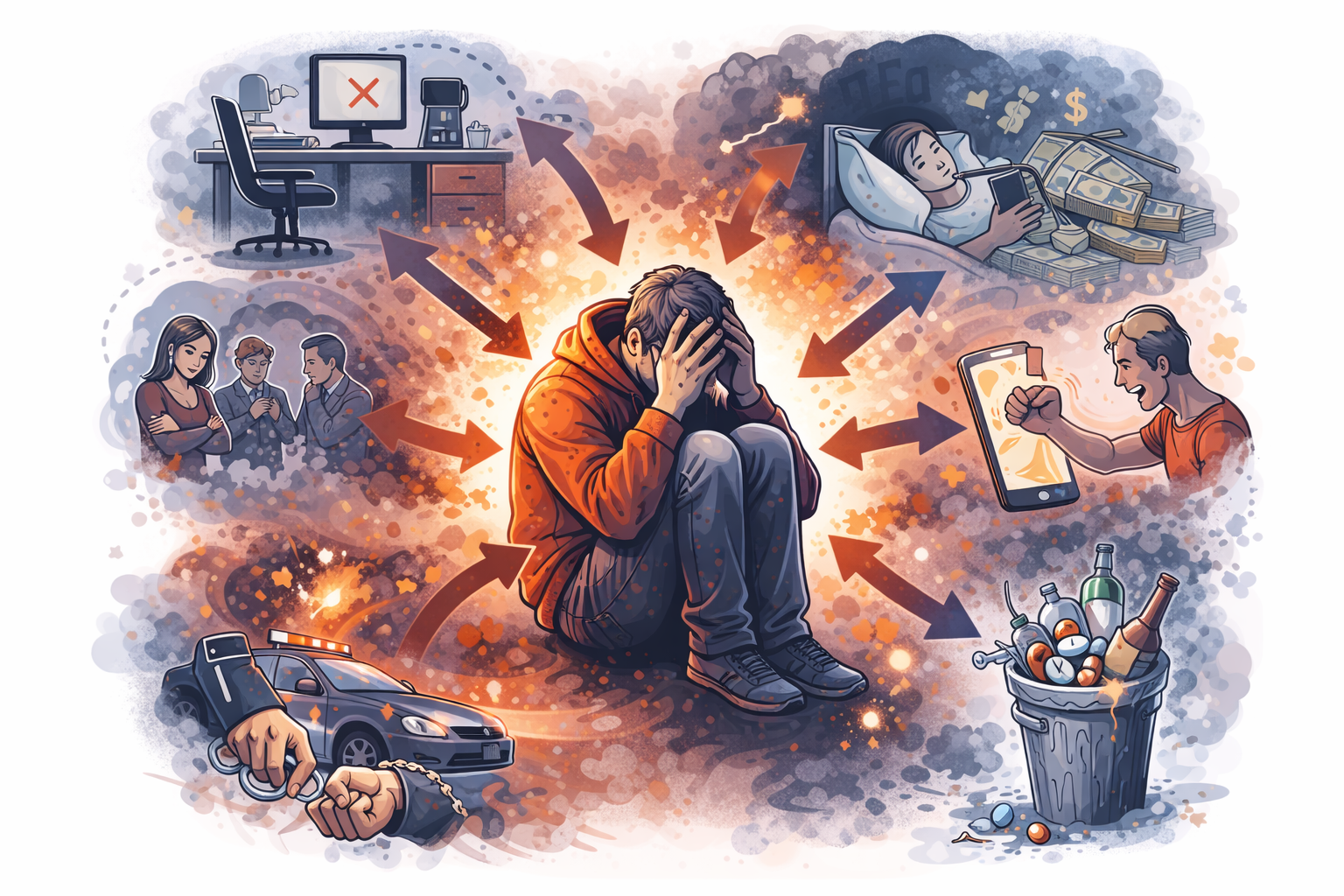
Addiction rarely begins suddenly. Instead, it often develops through gradual changes in behavior, thinking patterns, and emotional regulation.
These changes may initially seem small, but over time they can begin to affect many areas of life.
Common behavioral signs of addiction include:
• secrecy about activities or spending
• withdrawing from family or friends
• changes in mood or irritability
• difficulty maintaining responsibilities
• loss of interest in previously important activities
Someone struggling with addiction may begin structuring their day around substance use.
For example, they may:
• plan social events where substances are available
• avoid situations where they cannot use
• spend increasing amounts of time recovering from substance use
Addiction can also affect decision-making.
People may begin taking risks they normally would avoid, such as driving while intoxicated or spending money meant for bills.
These behaviors reflect how addiction begins to reorganize priorities and coping strategies.
Recognizing these patterns early can help individuals and families seek support before the condition becomes more severe.

Leave a Reply