
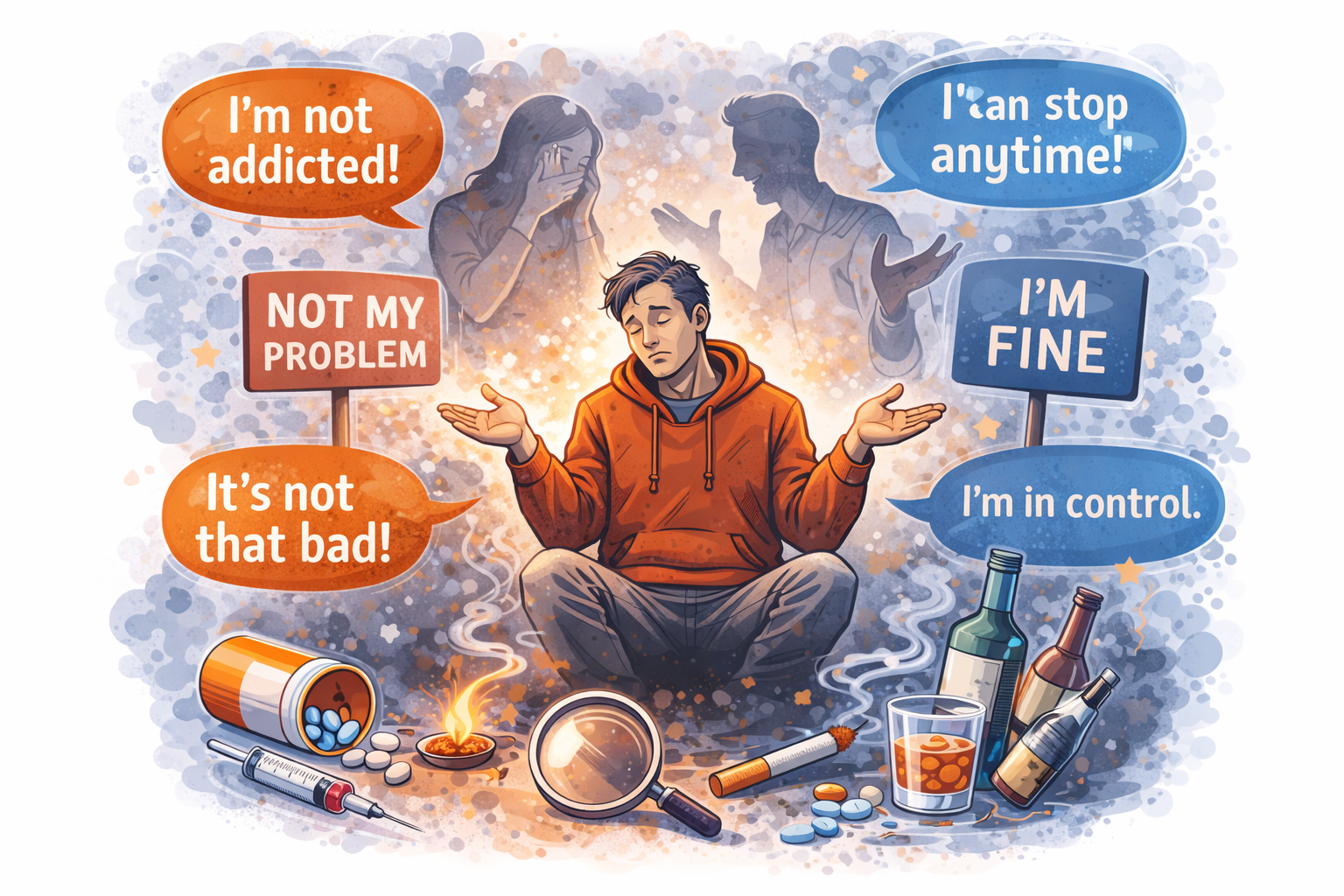
One of the most common psychological features of addiction is denial.
Denial does not always mean someone refuses to acknowledge substance use entirely. Often it appears as minimization or rationalization.
Examples may include statements such as:
• “I only drink on weekends.”
• “Everyone else drinks more than I do.”
• “I can stop whenever I want.”
These statements are not always intentional dishonesty. In many cases, denial functions as a defense mechanism.
Addiction can create feelings of shame, fear, or uncertainty about the future. Minimizing the problem may temporarily protect a person from confronting these difficult emotions.
However, denial can also make it harder for individuals to recognize the impact of their substance use.
From a clinical perspective, understanding denial allows professionals and family members to approach addiction with empathy while still encouraging accountability and change.
Recognizing denial is often one of the first steps toward recovery.

Leave a Reply