
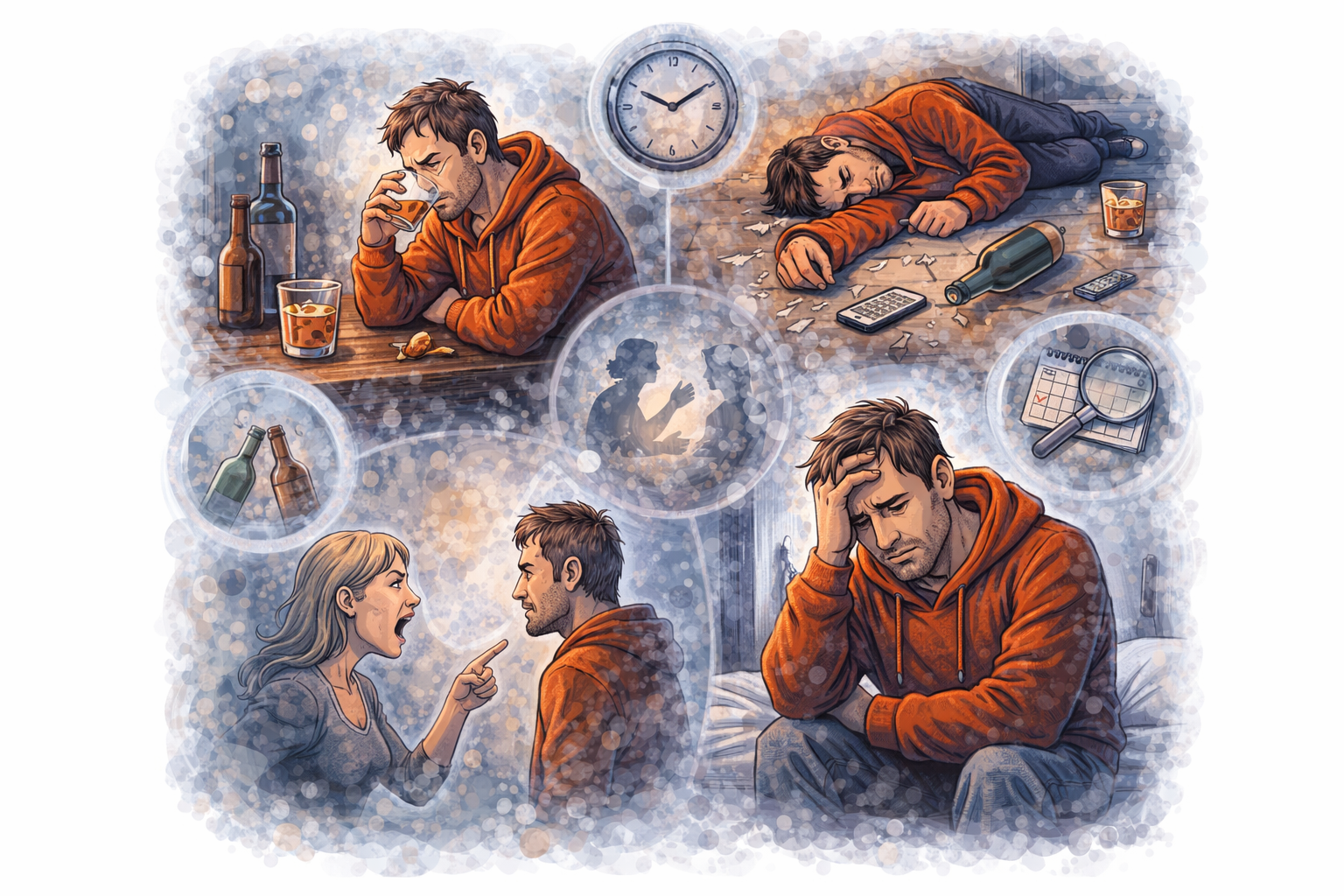
Behavior is one of the clearest ways to understand how Alcohol Use Disorder develops and maintains itself over time. While the emotional and physical effects of alcohol are important, it is often behavioral patterns that reveal how deeply alcohol use is affecting a person’s life.
One key behavioral pattern is avoidance. Individuals may begin avoiding responsibilities, difficult conversations, or stressful situations by turning to alcohol. Over time, alcohol becomes a way to escape rather than address underlying issues.
Another common pattern is ritualistic drinking behavior. This may include drinking at the same time every day, in specific settings, or in response to certain triggers. These routines can reinforce the habit and make it more difficult to change.
Individuals may also display impulsive decision-making. Alcohol lowers inhibitions, which can lead to risky behaviors such as overspending, unsafe driving, or engaging in conflicts. These actions often have consequences that further impact the person’s life.
Secrecy is another behavioral pattern that may develop. A person might hide alcohol, lie about how much they are drinking, or avoid discussing their behavior with others. This often occurs because of shame, fear of judgment, or a desire to maintain control.
Over time, alcohol use can become a central organizing factor in a person’s life. Decisions about social activities, relationships, and daily schedules may revolve around drinking.
Understanding these behavioral patterns is essential because they highlight the role alcohol plays in a person’s life. When these patterns are recognized, individuals can begin to identify healthier alternatives and work toward change.

Leave a Reply